


- About us
On the morning of the Winter Solstice, sunlight streams through the kitchen window, casting soft ripples on the cutting board. Family members gently peel off Chinese cabbage leaves one by one. Amid the running water, fingertips brush over every leaf vein. Their focused expressions turn this simple vegetable-washing moment into the plainest and warmest ritual of winter.
I. Chopping and Seasoning for Winter Flavors
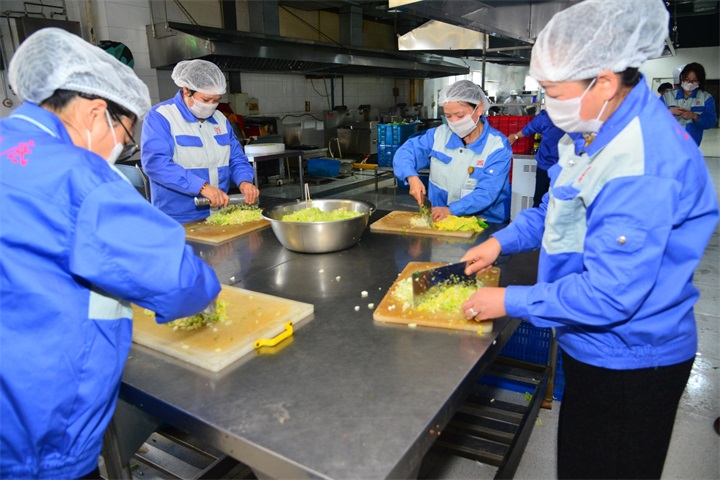
Soon, steady chopping sounds fill the air. Blanched cabbages are finely minced on the board. Nearby, everyone carefully trims and washes garlic leaves — not just a garnish, but the secret mark for our lucky dumplings today.
Garlic is chopped extremely fine, almost into a paste, so its aroma can fully blend into the filling. The knife falls swiftly. Meanwhile, a portion of minced pork is set aside. Once the garlic is ready, seasoning and mixing begin.
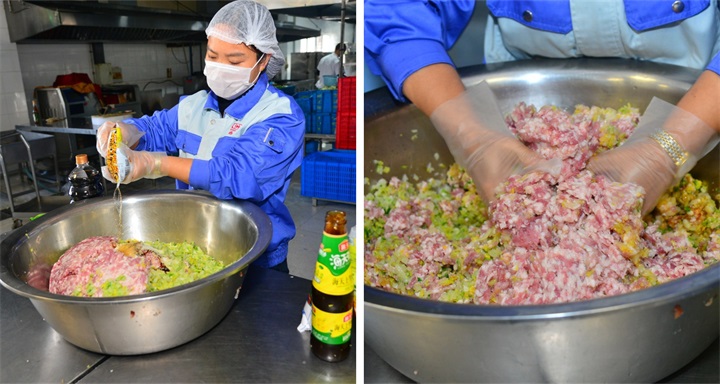
One colleague stands before the large stainless steel basin, puts on gloves and adds seasonings one after another. “The pork filling must be mixed by hand; tools cannot bring out the same rich flavor,” she says as she kneads the meat, ensuring every strand is evenly coated with seasoning.
The fragrance spreads slowly — the fresh sweetness of cabbage and the mellow taste of pork mingle in the Winter Solstice sunlight, wrapping everyone in comforting warmth.
II. Twenty Pairs of Hands Wrap Up Reunion
At half past nine, colleagues gather to make dumplings.
“It smells wonderful!” Voices arrive before people step in. The kitchen instantly comes alive.
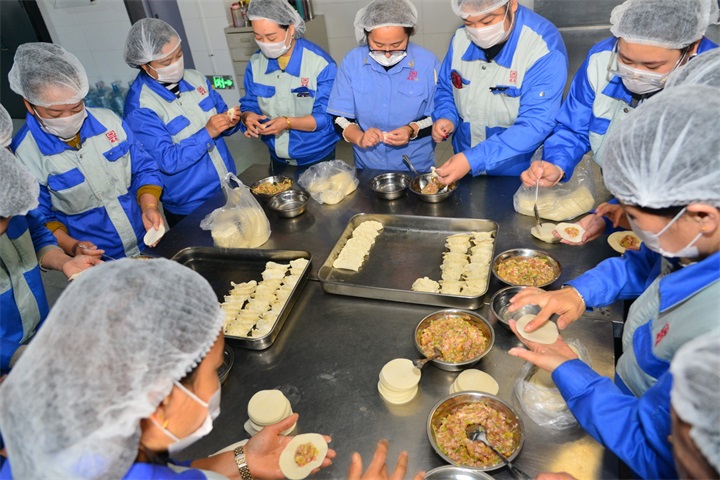
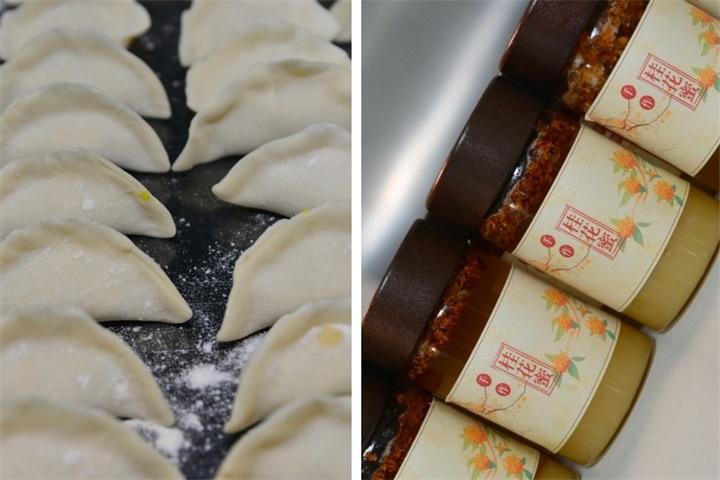
More than twenty people gather around the long table. There are seasoned elders as well as young newcomers trying for the first time. In the center sits a big bowl of filling, surrounded by neatly rolled, round dumpling wrappers.
“We will make 800 dumplings today, among which 40 are lucky ones. Anyone who finds a lucky dumpling gets a bottle of handmade osmanthus honey,” one family member says with a smile.
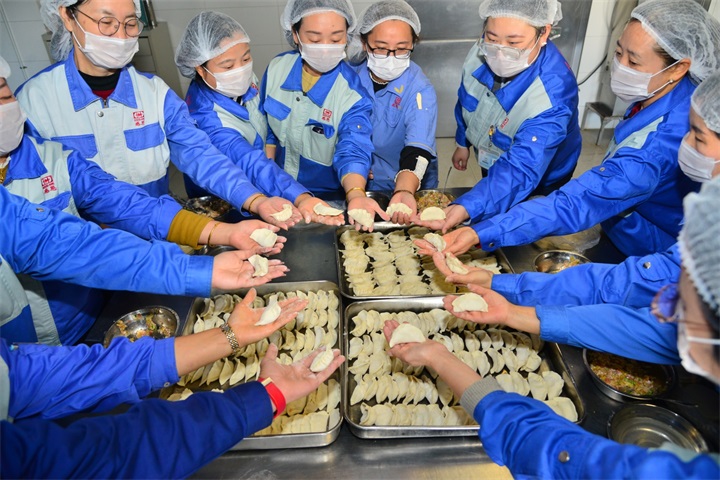
Hands start moving. Experienced elders work smoothly: place wrapper, add filling, dab water, fold and seal in one fluid motion. Dumplings line up like little gold ingots, neat and tidy. Younger teammates are less skilled but eager to keep up. Their clumsy attempts draw gentle laughter from everyone.
III. Steam Rises and Aroma Fills the Air
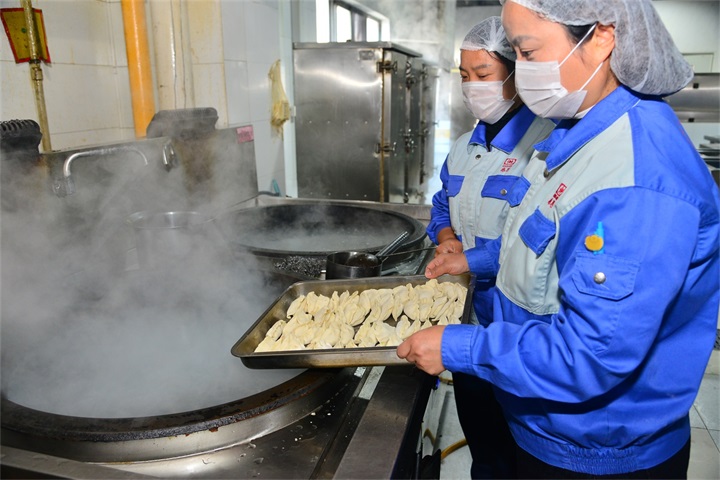
At half past ten, the first batch of dumplings is ready.
Ten trays are laid out. Plump white dumplings give off faint steam, standing quietly like little guards.
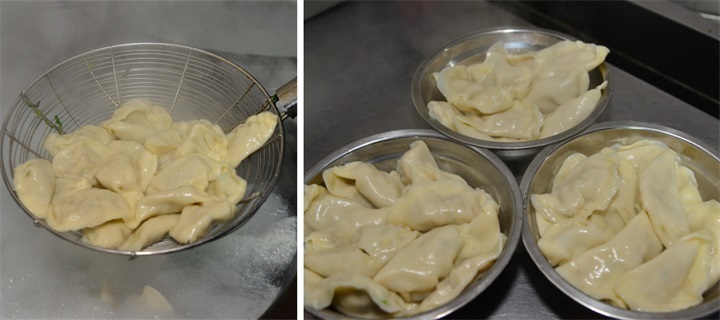
Water in the big pot is already boiling. A colleague who cooks often takes charge. She gently slides dumplings into the water with a skimmer. “Do not add too many at once, or they will stick together.” She stirs softly. Dumplings bob up and down in boiling water and gradually turn translucent.
The fragrance fully unfolds — wheat aroma, fresh meat, sweet vegetables, and a subtle warm note of ginger. It is the taste of festival, and also the warmth of home.
IV. Osmanthus Honey Preserves the Warmth of Winter
Forty bottles of osmanthus honey match forty lucky dumplings.
The meaning is simple and sincere: peace, smoothness, sweetness and wellness, wrapping warmth throughout the winter.
The handmade osmanthus honey finds its new owners amid cheers of congratulations. Each bottle locks in the fleeting bloom of osmanthus blossoms, as well as all the warmth of this winter morning.
The Winter Solstice marks the longest night of the year. Yet this meal of dumplings, bottles of osmanthus honey, everyone’s careful preparation and cheerful laughter make it bright and warm.
May warmth be found in every ordinary day;
May surprises await every simple encounter.

